

Blogs
Blue lotus flower: effects, history and how to choose the right form
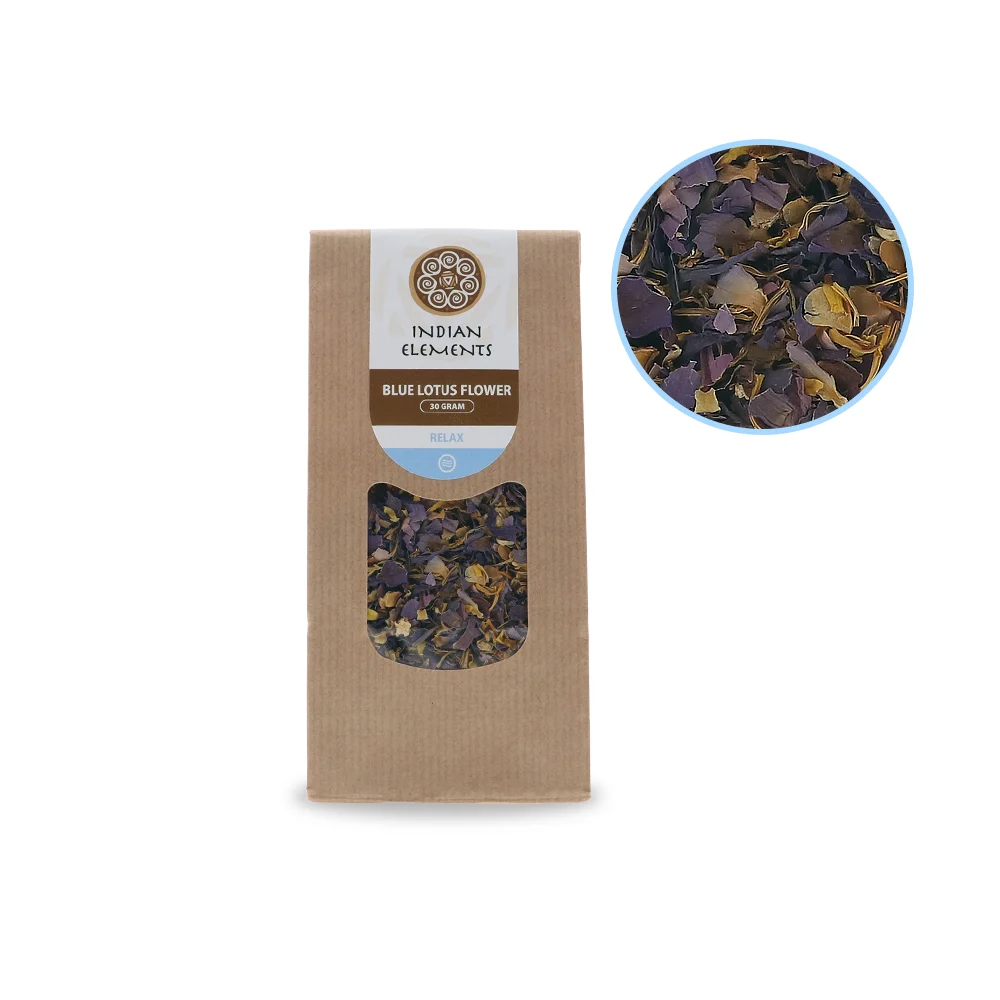
Blue lotus is one of the oldest “relaxing plants” we know. The flower shows up on temple walls and tomb paintings in ancient Egypt, and today the dried petals are sold as a herbal tea, a tincture or a smoking herb. Search for it online and you will find big promises. The real picture is more modest and more interesting.
In this guide we explain what blue lotus actually is, what science knows about the compounds in the flower, how the dried flower and the extract differ, and what you should know about safety and the law before you buy it.

Table des matières
What is blue lotus?
Blue lotus is the common name of Nymphaea caerulea, a water lily that grows along the Nile and in other parts of eastern and southern Africa. You will also see it called the Egyptian blue lotus, blue water lily or sacred blue lily. Botanists today often list it as Nymphaea nouchali var. caerulea.
Despite the name, it is not a true lotus. The sacred lotus of India and Asia is Nelumbo nucifera, a different plant family altogether. Blue lotus is a water lily: its round leaves float on the water and its pale blue to violet flowers rise just above the surface.
The flowers have a typical rhythm. They open in the morning and close again in the afternoon. That daily “rebirth” is exactly why the plant became such a strong symbol in Egypt.
Blue lotus in ancient Egypt
In Egyptian art the blue water lily is everywhere: on columns, jewellery, wall paintings and in funeral offerings. The flower was linked to the sun, which also rises in the morning and disappears in the evening, and to the god Nefertem, who is often shown with a lotus on his head. Flowers were found in the tomb of Tutankhamun.
Whether Egyptians used the flower as a psychoactive drink is debated. Some researchers read scenes of people smelling the flower at banquets as proof of ritual use, sometimes soaked in wine. Others see it mainly as a symbol of beauty, scent and renewal. What is certain is that the plant had a special status for thousands of years, and that this history explains a large part of its popularity today.
What is in the flower? Apomorphine and nuciferine
The two compounds that are mentioned most often are apomorphine et nuciferine, both so-called aporphine alkaloids. In the lab, apomorphine acts on dopamine receptors and nuciferine interacts with dopamine and serotonin receptors. These are the compounds people point to when they describe a calm, slightly dreamy mood after using blue lotus.
There is an important “but”. The amount of these alkaloids differs strongly per plant, per harvest, per extraction method and with how the product was stored. A 2023 analysis of blue lotus extracts made for the fragrance industry found almost no apomorphine or nuciferine at all, while other studies did detect nuciferine in commercial products. In short: the label “blue lotus” tells you little about the strength of a specific product.
The flower also contains flavonoids and aromatic compounds, which give the dried petals their sweet, slightly honey-like scent.
How do people describe the effects?
Human research on blue lotus is very limited. There are no large clinical studies, so everything below is based on user reports and on traditional use, not on proven effects.
Users mostly describe:
- a calm, relaxed feeling, often compared to the mood after a glass of wine;
- a light, sometimes dreamy or slightly euphoric state of mind;
- more attention to scent, music or meditation.
Effects are usually described as mild. Expectations, setting and the quality of the product play a large role. Treat blue lotus as a traditional herb with a long history, not as a remedy for sleep problems, anxiety or any other complaint. If you are struggling with these, a doctor is the right place to start.
Dried flower, extract or tea: the forms explained
At Headshop you will find blue lotus in a few different forms. They come from the same plant, but they are not interchangeable.
Dried blue lotus flowers
The most traditional form. The Indian Elements Blue Lotus Flower contains the dried petals and the reproductive parts of the flower. Most people use dried flowers as an herbal tea: steep them in hot water like any other herbal tea. Indian Elements states a serving of 5 grams per day on the pack. Stick to the instructions of the manufacturer.
Blue Lotus Extrait 10x
An extract is more concentrated than the dried flower. The Blue Lotus Extrait 10x by Shamanita is a tincture with alcohol (32%), so it is not suitable for everyone. Read the warnings on the bottle carefully: the manufacturer advises against use with high or low blood pressure, heart or lung problems, diabetes, during pregnancy and in combination with medicines, drugs or alcohol. “10x” refers to the ratio of plant material to finished extract, not to a tenfold stronger effect.
Blue lotus, white lotus and “Blue Lilly”
Le White Lotus Flower is a different species, Nymphaea lotus, the white water lily of Egypt. It is often described as lighter and more uplifting. Blue Lilly by Kratopia is another name for Nymphaea caerulea, packed as a dried herb. Always check the Latin name on the pack, because “lotus” and “lily” are used loosely in the trade.
Blue lotus products at Headshop
Risks, interactions and who should skip it
Blue lotus is often marketed as “completely natural and safe”. That is too simple. Because the safety of the plant has hardly been studied, poison control centres and toxicologists advise caution.
- Too much: reported effects at high amounts include dizziness, drowsiness, confusion, agitation, nausea and a fast heartbeat.
- Combinations: using blue lotus together with alcohol, sleeping pills, painkillers or anxiety medication can increase sedation. Because the alkaloids act on dopamine and serotonin, interactions with medication are possible.
- Vaping and resins: a small case series from 2021 described people who needed emergency care because of agitation and confusion after vaping or drinking blue lotus products of unknown composition. Avoid concentrated resins and e-liquids from unknown sources.
- Who should not use it: people who are pregnant or breastfeeding, anyone under 18, people with liver, heart or blood pressure problems and anyone taking medication. When in doubt, ask your doctor or pharmacist.
Never drive or operate machinery after using a relaxing herb. Start with the serving stated by the manufacturer and do not combine it with other substances.
Is blue lotus legal?
In the Netherlands, Nymphaea caerulea is not listed in the Opium Act, so the dried flowers and extracts can be sold here. Other countries have different rules. Poland, Latvia and Russia, for example, placed blue lotus under their drug legislation, and the US state of Louisiana restricts products meant for consumption or smoking. Ordering from abroad? Check the law in your own country first.
How to recognise a good blue lotus product
Because the strength of blue lotus varies so much, the source matters. Pay attention to:
- The Latin name on the pack: Nymphaea caerulea (or N. nouchali var. caerulea).
- Recognisable plant parts: whole or broken petals in violet, blue and golden tones, not an anonymous dark powder.
- A scent that is sweet and floral. A musty smell suggests moisture or old stock.
- A known brand with a clear list of ingredients, a serving and warnings on the label.
Store dried flowers in a closed container, dark and cool. Light, heat and moisture break down the aromatic compounds and the colour fades quickly.
Blue lotus in short
Blue lotus is a water lily with a fascinating history that is still used as a calming herb. The compounds in the flower are real, but the amounts vary and there is little research on people. Choose a product with a clear label, follow the manufacturer’s serving, do not combine it with alcohol or medication and read our related articles about relaxation exercises before bed et how to unwind for drug-free ways to relax.
Frequently asked questions about blue lotus
What does blue lotus do?
Is blue lotus the same as the lotus flower from Asia?
What is the difference between blue lotus flowers and the 10x extract?
Can you combine blue lotus with alcohol or medication?
Is blue lotus legal in the Netherlands?
How do I store dried blue lotus?
Sources d'information
- Poison Control: Blue lotus, serenity in every petal, but is it safe?
- Chemical composition, market survey and safety assessment of blue lotus extracts (Molecules, 2023)
- Toxicity from blue lotus after ingestion or inhalation: a case series (2021)
- Nymphaea caerulea, Wikipedia
 FR
 EN
 NL
 DE
 IT
 PL
 ES
 PT